
Sciatica Treatment in Caledonia: Can Chiropractic and Physiotherapy Help?
Understanding Sciatica
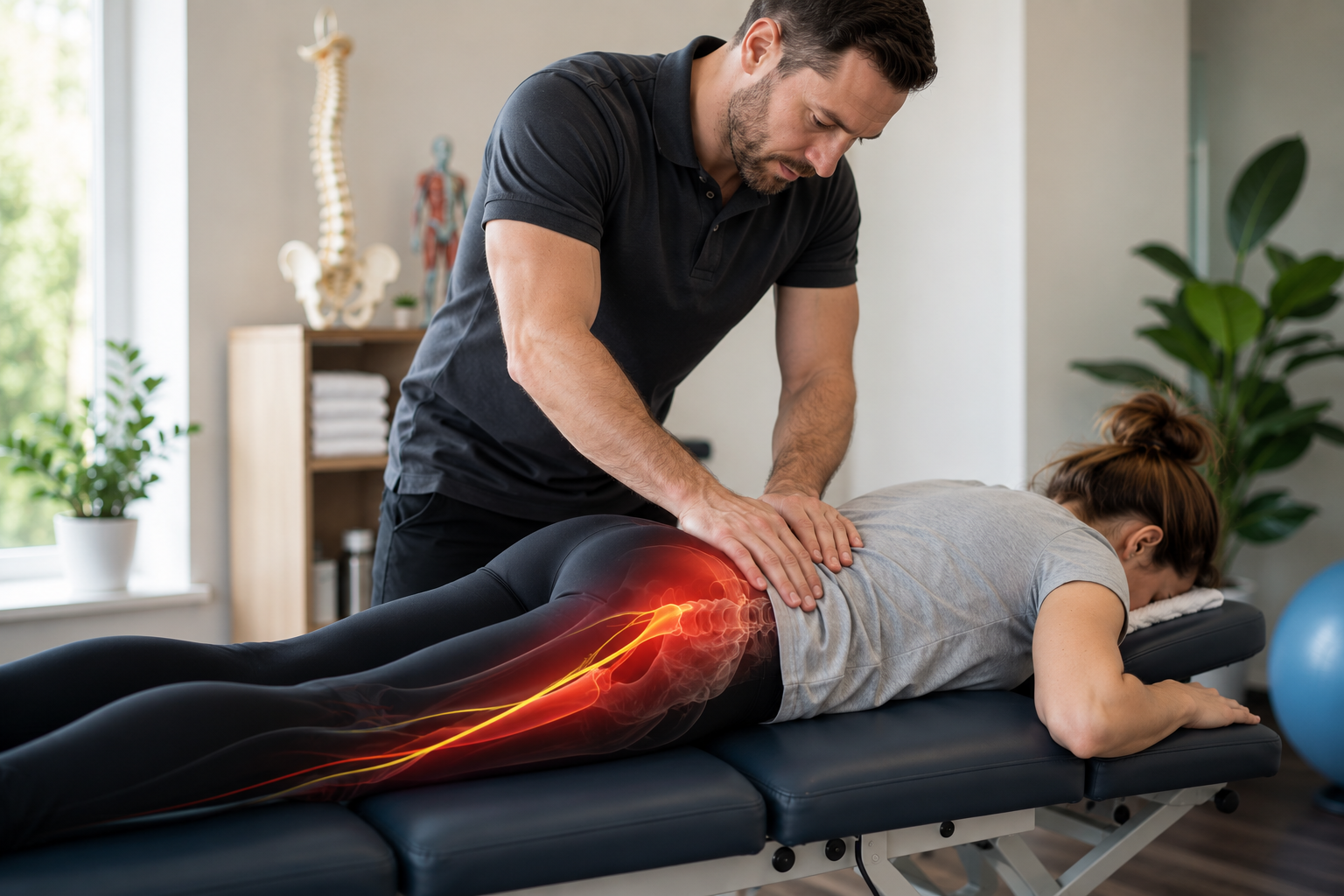
Sciatica is one of the most common causes of leg pain and lower back discomfort. It occurs when the sciatic nerve becomes irritated, compressed, or inflamed, causing symptoms that may travel from the lower back into the hips, buttocks, and down one or both legs.
While many people refer to sciatica as a condition itself, it is actually a symptom of an underlying issue affecting the lower spine, pelvis, or surrounding tissues.
At The Injury Rehabilitation Centre in Caledonia, patients often seek treatment for sciatica when symptoms begin interfering with work, daily activities, exercise, or sleep.
Common Symptoms of Sciatica
Sciatica symptoms can vary from person to person. Some individuals experience mild discomfort, while others struggle with significant pain and mobility limitations.
Common symptoms may include:
- Lower Back Pain – Pain may begin in the lower back and gradually spread into the buttock or leg.
- Radiating Leg Pain – Many people experience pain that travels along the path of the sciatic nerve, often affecting only one side of the body.
- Numbness and Tingling – Pins-and-needles sensations or numbness can occur in the buttock, thigh, calf, or foot.
- Muscle Weakness – Some patients notice weakness when walking, climbing stairs, or standing for long periods.
- Increased Pain with Sitting – Extended periods of sitting often aggravate sciatic symptoms and increase pressure on the affected structures.
What Causes Sciatica?
Several conditions can contribute to sciatic nerve irritation.
- Herniated or Bulging Discs – Spinal discs can place pressure on nearby nerve roots when they become damaged or displaced.
- Joint Dysfunction – Restricted movement within the spine or pelvis can contribute to abnormal loading patterns and nerve irritation.
- Muscle Tightness – Tight muscles, particularly the piriformis muscle in the buttock, may place pressure on the sciatic nerve.
- Degenerative Changes – Age-related changes within the spine may narrow the spaces where nerves travel, creating compression.
- Sports and Workplace Injuries – Repetitive lifting, twisting, bending, and athletic injuries can all contribute to sciatic symptoms.
How Is Sciatica Diagnosed?
Accurate diagnosis is important because not all leg pain is caused by sciatica.
A healthcare professional will typically evaluate:
- Pain location and symptom patterns
- Range of motion
- Strength and neurological function
- Walking and movement mechanics
- Medical history and previous injuries
The goal is to identify the underlying cause of nerve irritation and develop an appropriate treatment plan.
Can Physiotherapy Help Sciatica?
Physiotherapy is often one of the most effective conservative treatment options for sciatica. Rather than simply focusing on symptom relief, physiotherapy aims to address the movement dysfunctions and mechanical issues contributing to the condition.
- Movement Assessment – A physiotherapist evaluates posture, mobility, strength, flexibility, and movement patterns that may be contributing to symptoms.
- Therapeutic Exercise – Specific exercises help improve mobility, strengthen supporting muscles, and reduce stress on irritated structures.
- Stretching and Mobility Work – Targeted mobility exercises may help reduce nerve tension and improve movement quality.
- Education and Self-Management – Patients learn strategies for sitting, lifting, exercising, and performing daily activities more comfortably.
- Long-Term Recovery – Physiotherapy focuses on restoring function and reducing the risk of recurring episodes.
Can Chiropractic Care Help Sciatica?
Chiropractic care may also play an important role in managing sciatica symptoms for some patients.
Treatment focuses on improving joint mobility, restoring normal movement patterns, and reducing mechanical stress throughout the spine and pelvis.
- Joint Mobility Restoration – Restricted spinal or pelvic joints may contribute to abnormal movement patterns that aggravate symptoms.
- Manual Therapy – Hands-on treatment techniques may help improve movement and reduce discomfort.
- Functional Assessment – A chiropractor can identify biomechanical factors that may be contributing to ongoing irritation.
- Collaborative Care – When appropriate, chiropractic care may be combined with physiotherapy, massage therapy, or acupuncture as part of a comprehensive rehabilitation plan.
Is Combined Treatment More Effective?
Many patients benefit from a multidisciplinary approach. Because sciatica often involves multiple contributing factors, combining treatments may provide more comprehensive support for recovery.
Depending on individual needs, treatment plans may include:
- Physiotherapy
- Chiropractic care
- Massage therapy
- Acupuncture
- Rehabilitation exercises
- Education and movement coaching
This approach allows clinicians to address pain, mobility, strength, and long-term function simultaneously.
When Should You Seek Professional Treatment?
You should consider seeking professional assessment if:
- Pain lasts longer than a few days
- Symptoms are worsening
- Leg numbness or weakness develops
- Daily activities become difficult
- Exercise or work activities are limited
- Previous episodes continue to return
Early assessment often helps identify contributing factors before symptoms become more difficult to manage.
Sciatica Treatment in Caledonia
If you are experiencing lower back pain, radiating leg pain, numbness, or tingling, professional assessment can help determine the cause and identify appropriate treatment options.
At The Injury Rehabilitation Centre, our team provides physiotherapy, chiropractic care, massage therapy, acupuncture, and injury rehabilitation services designed to help patients move better, reduce pain, and return to the activities they enjoy.
Whether your symptoms are new or ongoing, early treatment may help support a more comfortable recovery and improve long-term outcomes.